 Pin This
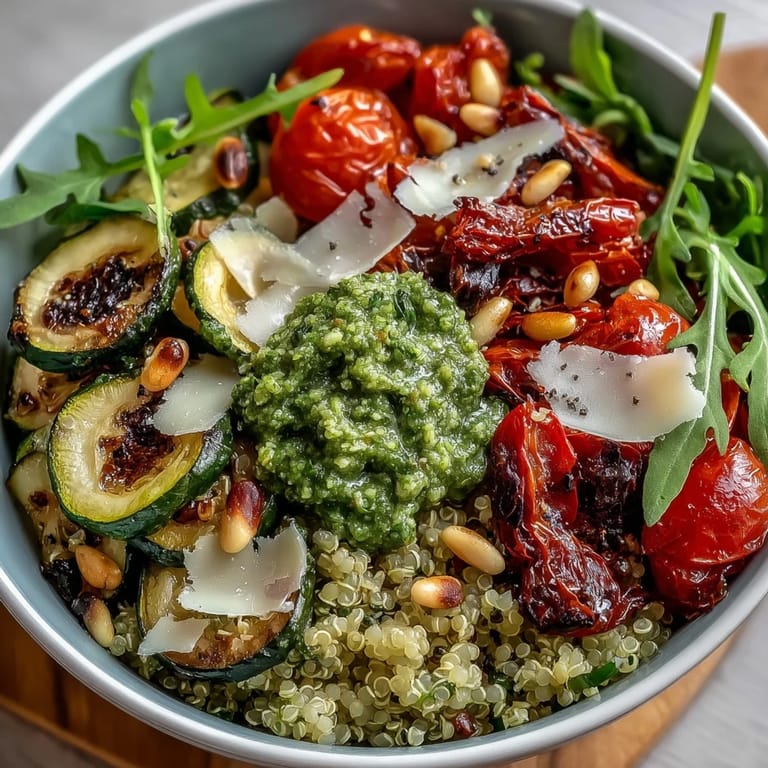
 There's something about the peppery bite of arugula that catches you off guard the first time you taste it in a bowl like this. I stumbled onto this combination on a Tuesday afternoon when my farmer's market haul was looking sparse but hopeful, and I wanted to create something that felt complete without being complicated. The way the homemade pesto clings to warm quinoa while fresh greens wilt slightly underneath—that's when I knew I'd found something worth making again and again.
I made this for my roommate one evening when she was overwhelmed with work, and watching her face soften as she tasted it—that sharp, grassy pesto mixing with the earthiness of roasted vegetables—reminded me that sometimes feeding people is the most direct way to say you care. She asked for the recipe before she'd finished her bowl.
Ingredients
- Quinoa (1 cup uncooked): Rinse it thoroughly under cold water before cooking to remove any bitterness, and this step genuinely changes the texture and taste.
- Water (2 cups): The ratio matters here—too much and you'll end up with mushy grains, too little and they stay crunchy.
- Salt (½ teaspoon for grains, ¼ teaspoon for pesto): Seasoning in layers rather than all at once gives you better control over the final flavor.
- Cherry tomatoes (1 cup, halved): Choose ones that feel slightly firm and smell sweet—these will caramelize beautifully and burst with concentrated flavor.
- Zucchini (1 medium, sliced): Cut them on the bias for more surface area and faster, more even caramelization in the oven.
- Red bell pepper (1 medium, chopped): The sweetness balances the peppery arugula and adds vibrant color that makes the bowl feel celebratory.
- Olive oil (½ cup for pesto plus 1 tablespoon for roasting): Use a quality one you actually like tasting, because it's the base note of everything.
- Fresh arugula (2 cups packed for pesto, 2 cups for assembly): Don't buy pre-bagged if you can help it—loose arugula from the produce section stays fresher longer and tastes more alive.
- Walnuts or pine nuts (¼ cup for pesto): Toast them lightly in a dry pan first if you have time—it deepens their flavor and makes them less forgettable.
- Garlic (1 clove): One clove is enough; more than that and the pesto becomes a garlic showcase instead of a supporting player.
- Parmesan cheese (½ cup grated plus ¼ cup shaved): Buy a wedge and grate it yourself; the pre-grated stuff has anti-caking agents that change the texture.
- Lemon juice (1 tablespoon): Fresh lemon, always—bottled tastes a little tired by comparison and misses the brightness this dish needs.
- Black pepper: Freshly ground makes all the difference in how it feels on your tongue.
Tired of Takeout? 🥡
Get 10 meals you can make faster than delivery arrives. Seriously.
One email. No spam. Unsubscribe anytime.
Instructions
- Warm your oven and start the quinoa:
- Set the oven to 400°F and place a saucepan over medium heat. Rinse your quinoa under cold water until the water runs clear, then combine it with 2 cups of water and salt. Bring everything to a boil, then drop the heat low, cover, and let it bubble gently for 15 minutes until the water disappears and you see those little spirals pop out.
- Get the vegetables ready for roasting:
- While the quinoa cooks, halve your cherry tomatoes, slice the zucchini into thin rounds, and chop the bell pepper into chunky pieces. Toss everything together with olive oil and black pepper, then spread it across a baking sheet in a single layer—they need room to caramelize, not steam.
- Roast until the edges turn golden:
- Slide the vegetables into the oven for 18 to 20 minutes, shaking the pan halfway through if you remember. You're looking for golden caramelization on the edges and a slight softness when you pierce with a fork.
- Build the pesto while everything cooks:
- In a food processor, combine 2 cups of packed arugula, your walnuts or pine nuts, 1 garlic clove, and the grated Parmesan. Pulse until it's broken down, then with the motor running, drizzle in the olive oil slowly while adding your lemon juice. Taste it and adjust the salt to your preference.
- Bring it all together in one bowl:
- Fluff the cooked quinoa with a fork and transfer it to a large mixing bowl. Add the warm roasted vegetables and pour in about half of your pesto, then fold everything together gently so the pesto coats everything without crushing the grains.
- Assemble in individual bowls:
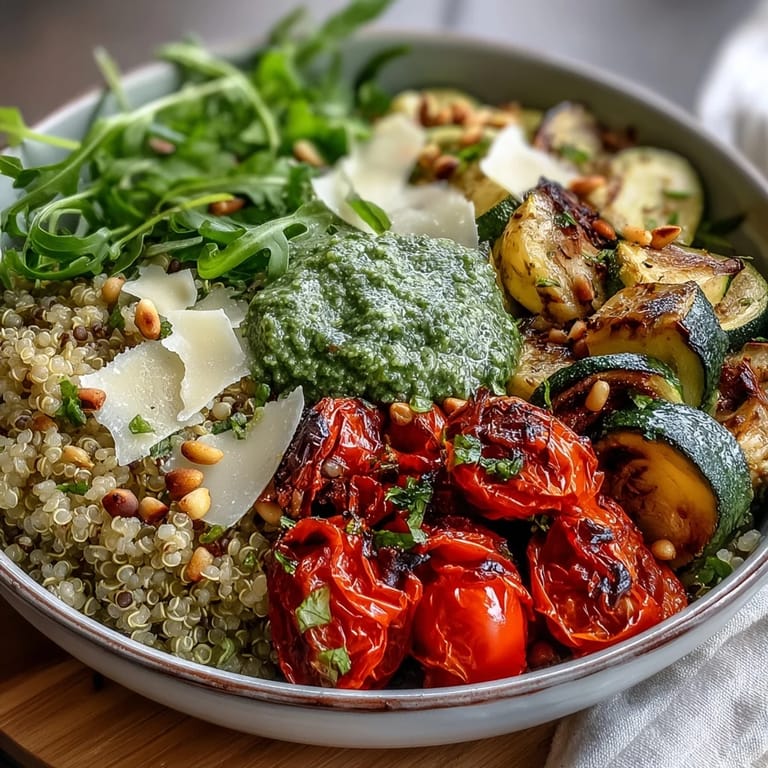
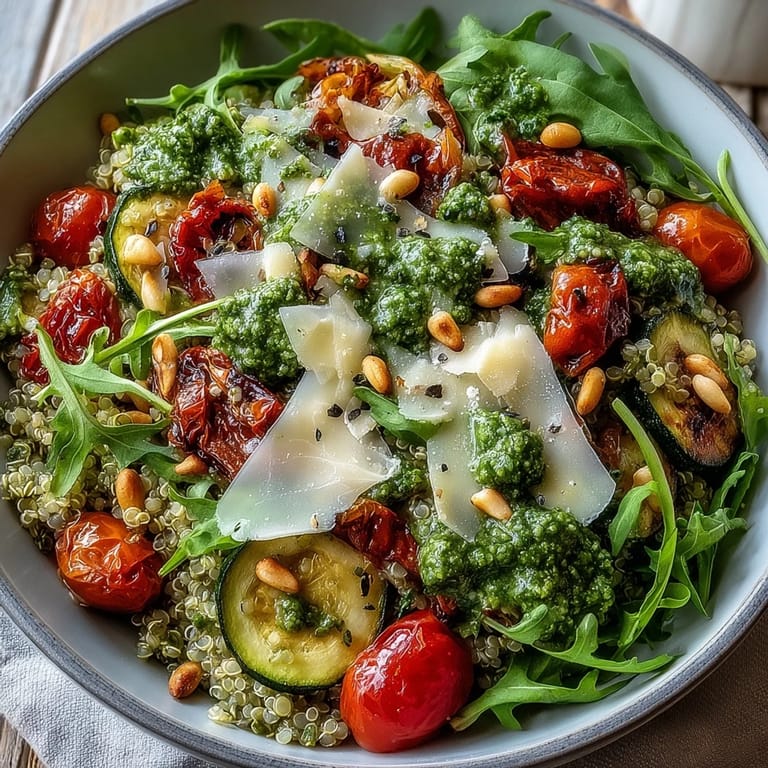
- Divide the fresh arugula among four bowls, then top each with a generous portion of the quinoa mixture. Drizzle the remaining pesto over the top and add shaved Parmesan, toasted pine nuts if you have them, and a crack of fresh black pepper.
 Pin This
 There was a moment last spring when I made this for friends who were all trying to eat better, and instead of the usual quiet resignation around the table, people were actually excited. Someone asked for seconds and another friend took photos before eating, which almost never happens. That's when I realized this wasn't just a healthy option—it was genuinely delicious and worth showing up for.
Why the Pesto Makes Everything Better
The pesto is honestly the soul of this bowl, and it took me a few attempts to understand why. At first I made it too thick, thinking more concentrated meant more flavorful, but that's when I learned to drizzle the oil slowly and let it emulsify properly. Now I make extra and keep it in the fridge for spreading on toast, mixing into yogurt, or swirling into soups—it's become one of those recipes that justifies keeping arugula on hand at all times.
Variations That Keep It Interesting
Once you understand the structure of this bowl, it becomes a template for whatever looks good at the market. I've made it with farro instead of quinoa and brown rice when I was feeling nuttier. In winter, roasted root vegetables like beets and carrots work beautifully, though the earthiness requires a slightly different energy than the bright summery version.
Making It Your Own
The beauty of a bowl like this is that it responds to what you have and what you're craving. I've added grilled chicken for nights when I needed more protein, swapped in chickpeas for vegetarian friends, and even crumbled tofu once when I was experimenting. The pesto stays the star, and everything else becomes a supporting cast that you can rearrange.
- For a vegan version, use nutritional yeast instead of Parmesan and it loses nothing in translation.
- Double or triple the pesto recipe and freeze it in ice cube trays for emergency flavor whenever you need it.
- Toast your pine nuts fresh if possible—they make a real difference in texture and taste compared to pre-toasted versions.
 Pin This
 This bowl has become the recipe I make when I want to feel like I'm taking care of myself and the people around me at the same time. It's one of those meals that reminds you that eating well doesn't have to be complicated or joyless.
Recipe Questions & Answers
- → Can I make the arugula pesto ahead of time?
Yes, prepare the pesto up to 5 days in advance and store in an airtight container in the refrigerator. The flavors actually deepen and improve after a day or two. Keep the surface covered with a thin layer of olive oil to prevent oxidation and maintain vibrant green color.
- → What other grains work well in this bowl?
Farro adds a nutty chewiness, brown rice provides hearty texture, while couscous offers a lighter, quicker-cooking alternative. Each grain absorbs the pesto differently, creating unique variations. Adjust cooking times accordingly and ensure grains are fluffy before tossing with the vegetables.
- → How do I store leftovers?
Keep components separate for optimal freshness. Store cooked quinoa and roasted vegetables in sealed containers for up to 4 days. The pesto lasts 5 days refrigerated. Reheat grains and vegetables gently, then toss with fresh arugula and pesto just before serving to maintain the best texture and flavor.
- → Can I make this vegan?
Absolutely. Substitute nutritional yeast or vegan Parmesan for traditional Parmesan cheese in the pesto. Nutritional yeast provides a similar savory, umami flavor while adding B vitamins. The result remains just as creamy and satisfying, perfect for plant-based diets.
- → What vegetables can I substitute?
Feel free to swap based on seasonality. Roasted eggplant, sweet potatoes, or butternut squash work beautifully in autumn. Spring calls for asparagus and sugar snap peas. Almost any vegetable roasts well—just adjust cooking times so everything finishes tender and lightly caramelized.
- → Is there a nut-free option for the pesto?
Replace walnuts or pine nuts with sunflower seeds or pumpkin seeds for a nut-free version. Both provide pleasant crunch and healthy fats. Hemp seeds also work well and add extra protein. The pesto will still achieve that creamy, spreadable consistency without tree nuts.