 Pin This
 My neighbor knocked on the kitchen door one April morning with a basket of fresh broad beans from her garden, and I suddenly remembered why spring cooking feels like its own kind of magic. She stayed for coffee while I snapped open those fuzzy pods, and we started talking about shakshuka—the kind of dish that feels both simple and celebratory at once. That afternoon, I built this version around those beans, pulling in peas and asparagus from the market, and the whole pan came together with this warm, spiced tomato base that made the kitchen smell like somewhere far away and comforting all at once.
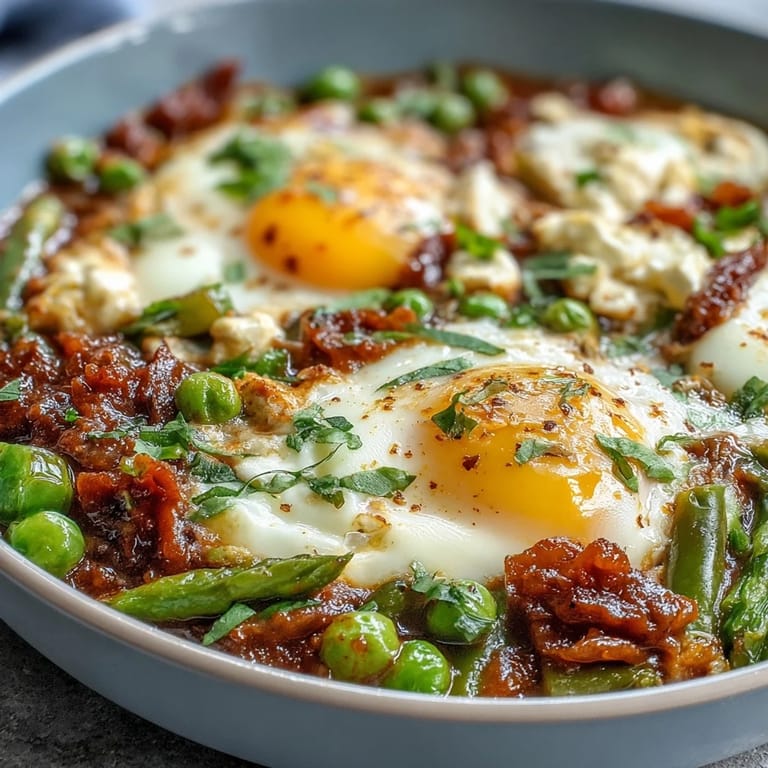
I made this for a small dinner party on a Tuesday evening, and what I loved most was watching everyone scoop up the last bits of sauce with bread, plates practically shining. One friend asked for seconds before finishing the first bowl, and another pulled out her phone to take a photo because the colors—the bright peas, the orange-red sauce, those golden yolks—looked almost too pretty to eat. Those moments remind me why I cook: it's not about impressing anyone, it's about creating something that makes people linger at the table a little longer.
Ingredients
- Olive oil: Use a good quality oil you'd actually taste—it's doing real work here, not just greasing a pan.
- Onion: Chopping it fine means it melts into the sauce, building a sweet foundation you won't taste as distinct onion.
- Garlic cloves: Mince them small so they distribute evenly and cook through without turning bitter.
- Red bell pepper: The sweetness balances the spices and adds color that makes the whole dish feel alive.
- Asparagus: Cut pieces uniformly so they cook at the same rate—nobody wants mushy asparagus next to crunchy bits.
- Peas and broad beans: If using frozen, don't thaw them first—they'll hold their shape better and keep their bright green.
- Canned tomatoes: Quality matters here since tomatoes are the sauce's backbone; passata works beautifully too and gives a smoother texture.
- Tomato paste: This concentrates the flavor and adds depth that raw tomatoes alone won't give you.
- Ground cumin: Toast it with the paprika to wake up its earthiness.
- Smoked paprika: A tablespoon might seem subtle, but it carries the whole flavor profile—don't skip it.
- Ground coriander: Half a teaspoon adds a gentle warmth that rounds out the spice blend.
- Chili flakes: Optional, but I always add them because a whisper of heat makes everything taste more like itself.
- Eggs: Use the freshest ones you can find; they'll poach more beautifully and taste richer.
- Parsley or mint: Fresh herbs scattered on top brighten everything and make the dish feel finished.
- Feta cheese: Crumbled over warm sauce, it softens slightly and adds a salty, creamy contrast.
Tired of Takeout? 🥡
Get 10 meals you can make faster than delivery arrives. Seriously.
One email. No spam. Unsubscribe anytime.
Instructions
- Build your flavor base:
- Heat the oil over medium heat and add your chopped onion, letting it soften for a good 4 to 5 minutes until it turns translucent and starts to smell sweet. You're not rushing this step—the slower the onion cooks, the more it becomes the foundation everything else rests on.
- Add the aromatics:
- Stir in the garlic and red pepper, cooking for another 2 to 3 minutes until the peppers soften slightly and the garlic's rawness fades. The kitchen will smell incredible at this point, and you'll know everything is on track.
- Toast your spices:
- Sprinkle in the cumin, smoked paprika, coriander, and chili flakes, stirring constantly for about 1 minute. This quick dry-cooking releases the oils in the spices and makes them coat the vegetables instead of settling at the bottom of the pan.
- Build the sauce:
- Add the tomato paste first, stirring it in for about a minute so it caramelizes slightly and darkens, then pour in your chopped tomatoes with a pinch of salt and pepper. Let this simmer uncovered for 10 minutes, stirring now and then, until it thickens enough that the oil starts to separate slightly on top—that's your signal the sauce is ready to hold vegetables.
- Add the spring vegetables:
- Slide in the asparagus, peas, and broad beans, cover the pan, and cook for 7 to 8 minutes until they're tender but still have a bit of resistance when you bite them. The steam trapped under the lid will gently cook them while keeping their color bright.
- Create wells for the eggs:
- Using the back of a wooden spoon, make four to six small indents in the sauce—these are nests for your eggs so they don't sink to the bottom. Take your time here; you want shallow wells, not deep holes.
- Poach the eggs:
- Crack each egg into a small bowl first, then gently slide it into a well so the yolk stays intact. Cover the pan and cook over medium-low heat for 5 to 7 minutes—the whites will turn opaque and set while the yolks stay gloriously runny, which is exactly what you want.
- Finish and serve:
- Remove from heat, scatter fresh parsley or mint across the top, crumble feta if you're using it, and serve immediately with lemon wedges and crusty bread. The heat of the sauce will wilt the herbs just enough to release their oils, and a squeeze of lemon adds brightness that pulls the whole dish together.
 Pin This
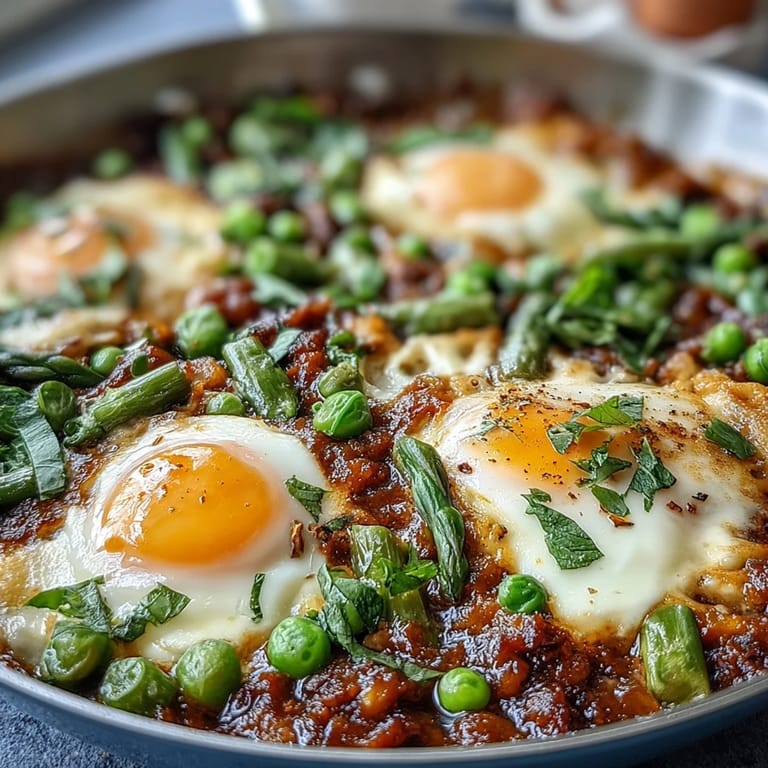
 One evening I made this for my family on a night when everyone seemed tired and scattered, and the moment we sat down and broke those golden yolks into the sauce, something shifted. The table got quiet in that good way where people are genuinely present with their food, and conversation naturally picked back up between bites. That's when I realized this dish does more than feed you—it creates a moment where everyone pauses together.
Why Spring Vegetables Matter Here
There's something about cooking with peas and broad beans that makes you feel connected to the season, like you're working with what the earth decided to offer right now instead of what a supply chain decided was convenient. The moment these vegetables hit the warm sauce, they soften but never collapse, and their natural sweetness balances the spices perfectly. This isn't the kind of dish that works the same way in winter with canned vegetables—it really does want the bright, tender freshness that spring brings.
The Art of the Runny Yolk
Getting that egg to cook just right—white set, yolk still liquid in the center—takes attention but not fuss. The trick is knowing your stove: some cooktops run hotter than others, so the first time you make this, start checking at five minutes and adjust your timing from there. Once you nail it, you'll have a visual cue you can trust—the white will turn from translucent to opaque, and that's your signal to pull the pan off the heat.
Variations That Still Feel True
This recipe is forgiving enough to bend without breaking. In summer, add spinach or zucchini; in a busier season, swap frozen vegetables without hesitation—they're picked and frozen at peak ripeness, so they're often better than sad fresh ones from the bottom of the bin. You can also make this entirely vegan by skipping the eggs and feta, then stirring in a can of drained chickpeas for protein, and honestly, it's just as satisfying.
- For more heat, add a chopped fresh chili or increase the chili flakes to a full teaspoon.
- If feta isn't your thing, try crumbled goat cheese or skip cheese entirely—the dish stands on its own.
- Serve with pita, flatbread, sourdough, or even alongside rice if you want the sauce to stretch further.
 Pin This
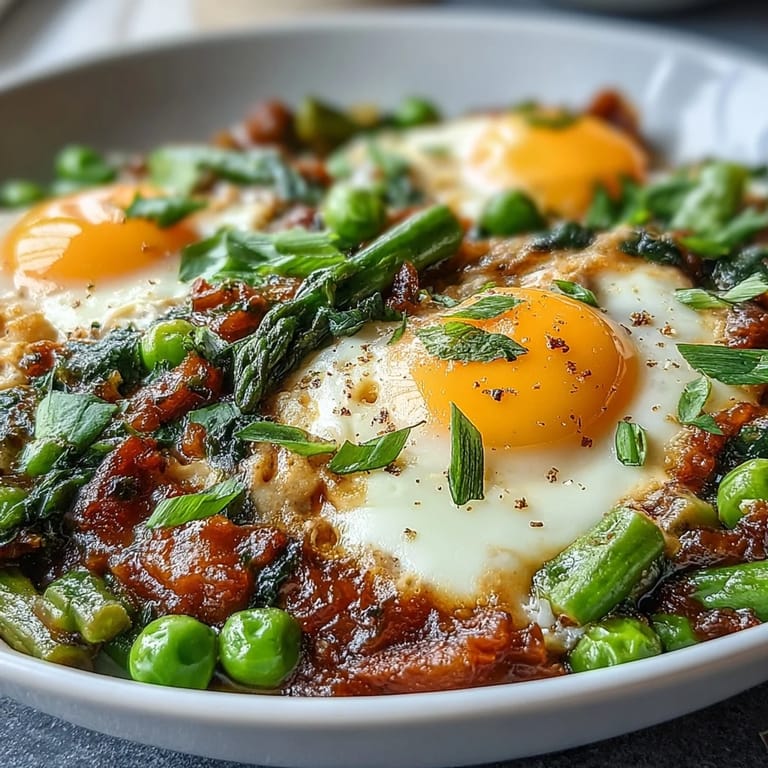
 This is the kind of dish that makes you feel like a good cook without demanding you be a perfect one—it's forgiving, it's beautiful, and it brings people together. Make it once and you'll find yourself making it again, probably with whatever vegetables you have on hand and whatever mood you're cooking in.
Recipe Questions & Answers
- → What vegetables work best in this shakshuka?
Fresh or frozen peas and broad beans shine alongside asparagus. You can also add spinach, zucchini, or diced bell peppers for extra variety and color.
- → How do I know when the eggs are perfectly cooked?
Cover the pan and cook for 5–7 minutes. The whites should be fully set and opaque, while the yolks remain slightly jiggly when you gently shake the pan.
- → Can I make this dish vegan?
Simply omit the eggs and feta cheese. Add drained canned chickpeas or white beans during the vegetable stage to maintain protein content and heartiness.
- → What bread serves this best?
Warm pita, flatbread, or crusty sourdough work wonderfully for scooping up the sauce. Choose gluten-free bread if needed to accommodate dietary restrictions.
- → How spicy is this dish?
The base seasoning offers mild warmth from chili flakes, smoked paprika, and cumin. Adjust the heat by adding more chili flakes or fresh chopped chili to taste.
- → Can I prepare the sauce ahead of time?
Yes, make the tomato and vegetable base up to a day in advance. Reheat gently, add fresh vegetables, and proceed with cracking the eggs when ready to serve.