 Pin This
 There's something about the smell of roasting butternut squash that makes a kitchen feel like home, even in the middle of a gray November afternoon. I stumbled onto this soup recipe years ago when I was trying to figure out how to use up a squash that had been sitting on my counter for weeks, and honestly, I've made it dozens of times since. The roasting step was the game-changer for me—it transforms the squash into something almost caramelized and sweet, nothing like the watery versions I'd attempted before. What started as a practical way to use vegetables became the soup I crave when the weather turns cold and I need something that feels both nourishing and indulgent.
I made this for my partner on one of those evenings when we both needed comfort food and conversation, and watching them smile through the first spoonful reminded me why simple, honest cooking matters. It's the kind of soup that fills your mouth with warmth and somehow makes the world feel a bit smaller and safer. We had it again the next night, and the night after that—it's one of those recipes that gets better as it sits.
Ingredients
- 1 medium butternut squash (about 1.2 kg), peeled, seeded, and diced: This is the star, and roasting it is non-negotiable if you want that deep, almost honeyed sweetness that makes people ask what's in it.
- 1 large onion, chopped: The onion will soften into the soup and create a natural sweetness that balances the spices.
- 2 medium carrots, peeled and chopped: They add subtle sweetness and body without overpowering the squash.
- 2 cloves garlic, minced: Don't skip this or rush it—let it bloom in the oil so it becomes mellow and aromatic.
- 800 ml vegetable stock: Use something you'd actually drink, because it's the backbone of the flavor here.
- 200 ml coconut milk (or heavy cream for a richer version): The coconut milk keeps it light and adds a subtle complexity, but cream works beautifully if that's what you have.
- 2 tbsp olive oil: Use good olive oil—you'll taste it in the finished soup.
- 1/2 tsp ground cumin and 1/4 tsp ground nutmeg: These spices add warmth and depth without making the soup taste spiced; they just enhance what's already there.
- Salt and black pepper, to taste: Always season at the end, after blending, because everything concentrates.
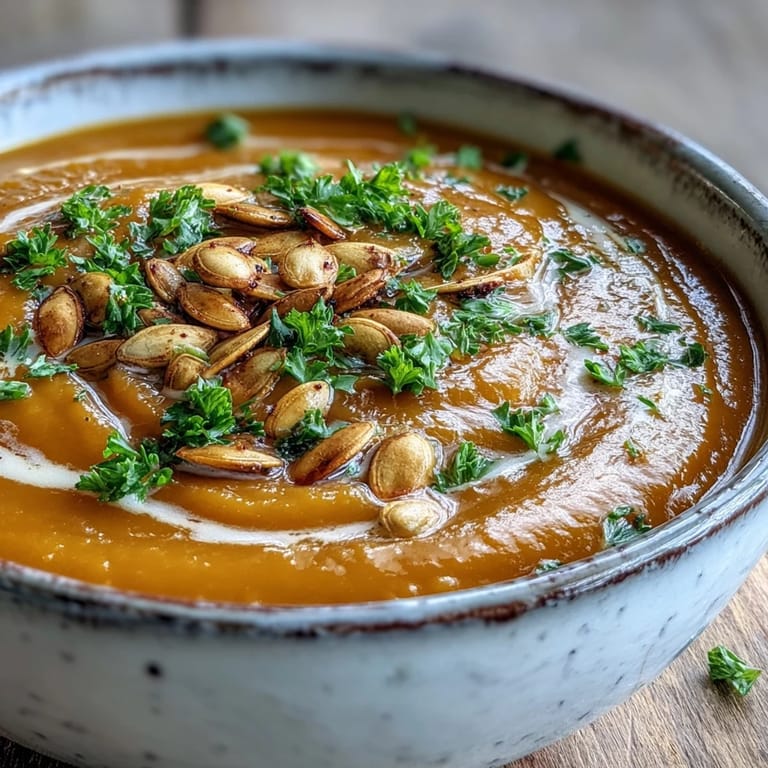
- Fresh parsley or coriander, chopped, and toasted pumpkin seeds (optional): These garnishes add texture and keep the soup from feeling one-note when you serve it.
Tired of Takeout? 🥡
Get 10 meals you can make faster than delivery arrives. Seriously.
One email. No spam. Unsubscribe anytime.
Instructions
- Roast the squash:
- Preheat your oven to 200°C (400°F) and toss your diced squash with a tablespoon of olive oil, salt, and pepper. Spread it out on a baking tray in a single layer and let it roast for 25 minutes—you want the edges to turn golden and the flesh to be fork-tender, releasing that sweet, caramelized aroma that fills your kitchen.
- Sauté the aromatics:
- While the squash roasts, warm the remaining olive oil in a large pot over medium heat and add your chopped onion and carrots. Let them soften together for 5 to 7 minutes, stirring occasionally, until they've lost their raw edge and the kitchen smells like a cooking show.
- Bloom the spices:
- Add your minced garlic, cumin, and nutmeg to the softened vegetables and cook for just a minute, until the spices become fragrant and the garlic loses its sharp bite.
- Build the soup:
- Pour the roasted squash into the pot along with your vegetable stock, bring everything to a boil, then lower the heat and let it simmer gently for 10 minutes. The squash will soften even more and the flavors will start to meld together.
- Blend until silky:
- Remove the pot from heat and use an immersion blender to purée the soup until it's completely smooth and velvety—if you're using a regular blender, work in careful batches and let the steam escape. This is the moment where everything transforms from chunky vegetables into something luxurious.
- Finish with creaminess:
- Stir in your coconut milk (or cream), heat it gently without boiling, and taste as you go so you can adjust the salt and pepper to your preference. Sometimes you'll want more of one, sometimes more of the other—trust your palate here.
- Serve with intention:
- Ladle the soup into bowls and top with fresh herbs, toasted pumpkin seeds, and a delicate swirl of coconut milk or cream if you're feeling generous. The garnishes matter; they give the soup texture and make it feel finished.
 Pin This
 There was an evening when my mother visited and I served her this soup, and she closed her eyes on the first taste and just sat with it for a moment—no words, just presence. That's when I realized that soup is about more than nutrition or convenience; it's one of the oldest forms of care, a way of saying I made something warm for you to hold in your hands. Since then, I've thought of this recipe as something I'm sharing, not just something I'm cooking.
Why Roasting Changes Everything
The difference between boiling squash and roasting it is the difference between a soup that tastes okay and one that tastes like autumn and comfort combined. Roasting caramelizes the natural sugars, creating depth and complexity that no amount of added spice can replicate. I learned this the hard way by making the boiled version first, tasting something flat and one-dimensional, and then trying roasting as a desperate last attempt to salvage the technique—and it was a revelation that changed how I approach cooking vegetables entirely.
The Magic of Spice Balance
Cumin and nutmeg are a whisper, not a shout, in this soup; they enhance and warm without announcing themselves. I've seen people add too much spice and overshadow the delicate sweetness of the squash, so remember that you can always add more but you can't take it out. Start conservative, taste, and adjust—your palate will guide you toward the right balance for what you're craving.
Customizing Your Soup
This recipe is flexible enough to bend with what you have on hand and what mood you're in. If you want heat, a pinch of chili flakes added to the aromatics transforms it into something with a gentle kick that builds as you eat. If you prefer richness, heavy cream instead of coconut milk gives you a more classic approach, while keeping the coconut milk makes it feel lighter and more interesting.
- For extra depth, try a tiny pinch of smoked paprika alongside the cumin and nutmeg—it adds a subtle smokiness without changing the soup's essential character.
- If you have fresh sage or thyme, a few leaves added at the end or used to garnish take the soup in a more herbaceous direction.
- Leftover soup keeps for three days in the refrigerator and actually tastes better the next day as the flavors settle together.
 Pin This
 This soup has become my answer to so many moments—a quiet lunch when I need grounding, a way to welcome someone into my home, a promise to myself that I'm worth taking care of on difficult days. Make it and see what it becomes for you.
Recipe Questions & Answers
- → Can I make this soup ahead of time?
Yes, this soup keeps beautifully for up to 4 days refrigerated. The flavors actually deepen after sitting, making it ideal for meal prep. Reheat gently on the stove, adding a splash of liquid if needed.
- → What brings out the best flavor in butternut squash soup?
Roasting the squash before simmering concentrates its natural sugars and adds caramelized notes. Sautéing the aromatics in olive oil and including toasted spices like cumin and nutmeg creates layers of flavor.
- → Is coconut milk necessary for this soup?
Not at all. Heavy cream works equally well for richness, or you can use additional vegetable stock for a lighter version. The coconut milk adds subtle sweetness and creates a dairy-free option.
- → How do I achieve the smoothest texture?
An immersion blender makes puréeing directly in the pot simple. If using a standard blender, work in batches and vent the steam. Roasting the squash first ensures it's tender enough to blend completely silky.
- → What pairs well with this soup?
Crusty bread, warm rolls, or garlic focaccia complement the creamy texture. For a complete meal, serve alongside a green salad with vinaigrette or as a starter before roasted meats and grains.