 Pin This
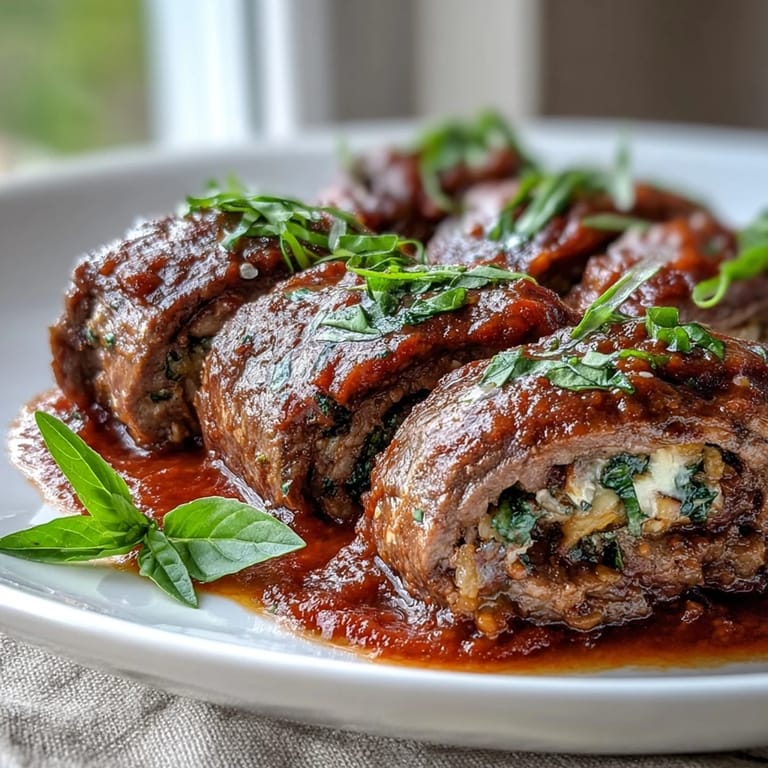
 The smell of simmering tomatoes and garlic pulled me into my neighbor's kitchen one autumn afternoon, and there on the stove sat a pan of braciole, the beef rolls bobbing gently in crimson sauce. She handed me a fork without a word, and the first bite—sweet raisins against salty cheese, all wrapped in tender meat—made me understand why her Sunday table was always full. I went home that day with a scribbled recipe and a promise to make it my own. It took three tries before I stopped overstuffing the rolls, but now it's the dish I make when I want to feel connected to something older and wiser than myself.
I first made this for a winter dinner party, nervously tying each roll while my friend kept refilling my wine glass. The kitchen filled with steam and the scent of oregano, and by the time we sat down, the braciole had turned fork-tender and rich. Everyone went quiet for the first few bites, then the questions started: what's inside, how did you learn this, can I take leftovers home. That night taught me that food this generous doesn't need fancy plating, it just needs to taste like care.
Ingredients
- Thin slices beef top round or flank steak: These cuts become meltingly tender after slow braising, and pounding them thin makes rolling much easier without tearing.
- Pecorino cheese: Its sharp, salty bite is essential to Sicilian braciole, standing up to the sweetness of raisins better than milder cheeses ever could.
- Pine nuts: Toasting them lightly before adding to the filling brings out a buttery, almost sweet flavor that makes each bite more interesting.
- Raisins: They plump up as the braciole simmers, adding unexpected pockets of sweetness that balance the savory elements beautifully.
- Fresh parsley and basil: Chopped herbs keep the filling bright and aromatic, cutting through the richness of cheese and meat.
- Breadcrumbs: Just enough to bind the filling without making it heavy or dry.
- Crushed tomatoes: The backbone of the sauce, they break down into a velvety base that clings to every slice of beef.
- Dry red wine: Deglazing with wine adds depth and a subtle acidity that makes the sauce taste more complex and rounded.
- Garlic and onion: Sautéed until soft and fragrant, they build the aromatic foundation the sauce needs to feel complete.
Tired of Takeout? 🥡
Get 10 meals you can make faster than delivery arrives. Seriously.
One email. No spam. Unsubscribe anytime.
Instructions
- Prep the Beef:
- Lay each slice flat on your cutting board and pound gently with a meat mallet until they're an even quarter inch thick. Season both sides with salt and pepper, being generous but not heavy handed.
- Make the Filling:
- Toss together pecorino, toasted pine nuts, raisins, parsley, basil, garlic, and breadcrumbs in a bowl until everything is evenly mixed. The filling should look like a rough, fragrant crumble.
- Roll and Tie:
- Spoon filling onto each beef slice, leaving a small border around the edges so it doesn't spill out when you roll. Roll tightly from one short end, tuck in the sides as you go, and secure with kitchen twine or a few toothpicks.
- Sear the Braciole:
- Heat olive oil in a large skillet over medium high heat and brown the rolls on all sides, turning carefully with tongs. This step builds flavor and helps the rolls hold their shape during braising.
- Start the Sauce:
- In the same skillet, sauté chopped onion until soft and translucent, then add minced garlic and cook just until fragrant. Pour in red wine if using, scraping up all the browned bits stuck to the pan.
- Simmer Everything Together:
- Stir in crushed tomatoes, oregano, salt, pepper, and a pinch of sugar if your tomatoes taste too sharp. Nestle the seared braciole into the sauce, cover the pan, and let it simmer gently for an hour and fifteen minutes, turning the rolls occasionally so they cook evenly.
- Finish and Serve:
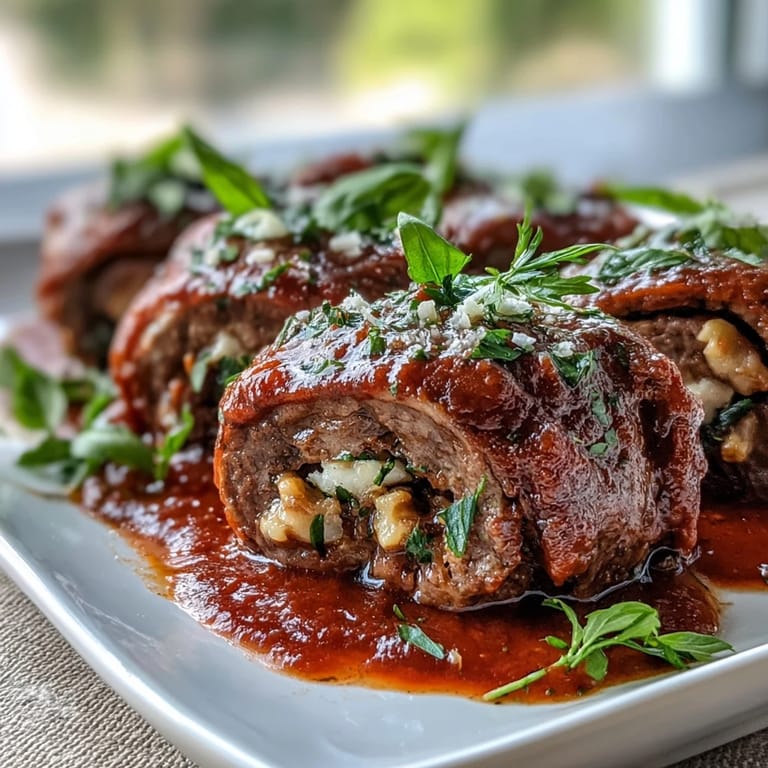
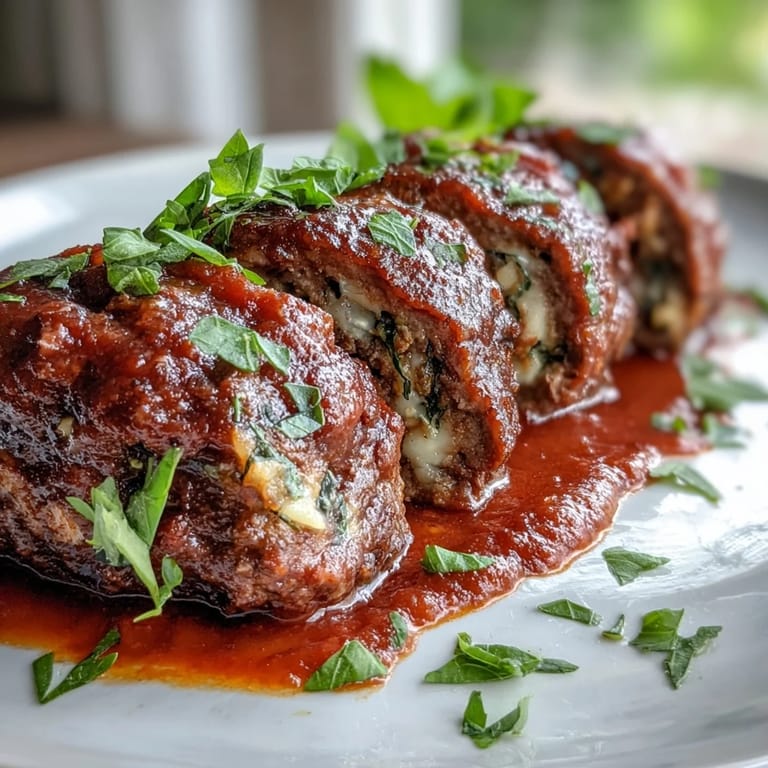
- Remove the braciole from the sauce, snip off the twine or pull out toothpicks, and slice each roll into thick rounds. Spoon the rich tomato sauce over the top and serve immediately.
 Pin This
 One Sunday, I made braciole for my parents and watched my dad reach for a second helping without saying a word, which is his version of high praise. My mom asked if I'd written the recipe down, and I realized it had become something I wanted to pass along, not just make once. That's when a dish stops being a project and starts feeling like a tradition.
Serving Suggestions
Braciole is rich and hearty, so it loves being paired with something that can soak up all that beautiful sauce. I like to serve it over a mound of creamy polenta or alongside rigatoni tossed with a bit of the tomato sauce. A simple arugula salad dressed with lemon and olive oil cuts through the richness, and crusty bread is non negotiable for mopping up every last drop. If you're pouring wine, reach for a bold Sicilian red like Nero d'Avola, it has the weight and fruit to stand up to the sweet and savory flavors without getting lost.
Make Ahead and Storage
Braciole is one of those rare dishes that actually improves after a day in the fridge, the flavors meld and deepen in a way that makes leftovers feel like a gift. Let the rolls cool completely in their sauce, then transfer everything to an airtight container and refrigerate for up to three days. Reheat gently on the stovetop over low heat, adding a splash of water if the sauce has thickened too much. You can also freeze braciole for up to two months, just thaw overnight in the fridge before reheating slowly to keep the beef tender.
Variations and Substitutions
If you want to make the filling even richer, tuck in some chopped hard boiled egg or thin slices of prosciutto before rolling. Swap pecorino for Parmigiano Reggiano if that's what you have, though you'll lose a bit of that sharp, salty edge. For a gluten free version, use gluten free breadcrumbs or finely ground almonds to bind the filling.
- Add a pinch of red pepper flakes to the sauce if you like a little heat threading through the sweetness.
- Try swapping raisins for chopped dried apricots for a different kind of fruity contrast.
- If pine nuts are too expensive, toasted slivered almonds work surprisingly well and cost much less.
 Pin This
 This is the kind of recipe that fills your kitchen with warmth and makes people linger at the table long after the plates are empty. I hope it becomes one of your go to dishes when you want to cook something that feels like a hug.
Recipe Questions & Answers
- → Can I use a different cut of beef?
Yes, flank steak or top round work best as they're lean and tender when braised. You can also use sirloin tip, but pound it thin for even cooking.
- → How do I prevent the rolls from falling apart?
Secure them tightly with kitchen twine or toothpicks before searing. Make sure to tuck in the sides while rolling to keep the filling contained during cooking.
- → Can I make this ahead of time?
Absolutely. Braciole tastes even better the next day. Prepare fully, refrigerate, and gently reheat in the sauce on the stovetop before serving.
- → What can I substitute for pine nuts?
Chopped walnuts or almonds work well. You can also omit nuts entirely if you have allergies, though they add authentic flavor and texture.
- → Is the red wine necessary?
No, it's optional. Red wine adds depth, but you can substitute with beef broth or simply skip it and proceed directly to adding the tomatoes.
- → What should I serve with braciole?
Traditional pairings include spaghetti, rigatoni, creamy polenta, or crusty Italian bread. The tomato sauce is perfect for tossing with pasta.