 Pin This
 My neighbor casually mentioned she'd never had proper Eggs Benedict, and I nearly dropped my coffee mug—how was that possible? That Sunday, I decided to invite her over for brunch and tackle this classic myself, despite my nervous energy about the hollandaise. Watching her face light up when that silky golden sauce hit the poached egg was worth every whisked moment of doubt. Now whenever I make this, I think of that kitchen filled with steam and laughter, and how something that seemed intimidating turned out to be completely manageable once I stopped overthinking it.
I'll never forget the Mother's Day brunch when my sister actually asked for seconds, which almost never happens with her. She sat there cutting into the egg, watching that perfect runny yolk cascade down, and said something like, "This tastes like someone really cared." That's when I realized Eggs Benedict isn't just breakfast—it's a small act of love served on an English muffin.
Ingredients
- English muffins, split and toasted: Use a fork to split them rather than a knife—those nooks and crannies catch the hollandaise beautifully.
- Canadian bacon: This is milder and less salty than regular bacon, which keeps the whole dish balanced; if you can't find it, thick-cut ham works in a pinch.
- Large eggs: Fresher eggs hold together better when poaching, so check that date on the carton.
- White vinegar: Just a tablespoon helps the egg whites set faster without affecting the taste—don't skip this small detail.
- Egg yolks for hollandaise: Room temperature yolks whisk more smoothly and emulsify better with the butter.
- Freshly squeezed lemon juice: Bottled lemon juice tastes flat by comparison, and the acidity here is crucial for flavor and preventing curdling.
- Unsalted butter, melted and warm: The butter must be warm but not piping hot, or the yolks will scramble; warm feels almost body-temperature to your wrist.
- Cayenne pepper: Just a whisper of this—it adds sophistication without heat, almost like a secret handshake in the sauce.
- Fresh chives or parsley: These are optional but they add a bright color and a fresh bite that makes the plate feel intentional.
Tired of Takeout? 🥡
Get 10 meals you can make faster than delivery arrives. Seriously.
One email. No spam. Unsubscribe anytime.
Instructions
- Build your hollandaise station:
- Fill a saucepan with an inch of water and bring it to a gentle simmer—think barely moving, not rolling. Set a heatproof bowl on top (it should sit just above the water without touching), and crack your egg yolks in there with the lemon juice, whisking until the mixture starts to thicken and pale slightly, maybe two minutes of steady whisking.
- Add butter slowly and deliberately:
- This is where patience matters—drizzle your melted butter in a thin stream while whisking constantly, as if you're coaxing the yolks to accept it. Once you've added about a quarter of the butter and the sauce is emulsifying nicely, you can be a bit bolder with the remaining butter, but keep whisking.
- Season and keep warm:
- Taste it, add a pinch of salt and cayenne, and remove from heat immediately. Cover the bowl loosely and set it aside on a warm (not hot) part of your stove—if it gets too hot, the whole thing breaks.
- Warm up the Canadian bacon:
- In a skillet over medium heat, lay those bacon slices down and let them warm through for about a minute per side until they're lightly browned and smell irresistible. Transfer them to a warm plate and keep nearby.
- Get the water ready for poaching:
- Fill a large saucepan with water, bring it to a gentle simmer (same barely-moving vibe as before), and add your tablespoon of vinegar. The water should be calm, not violent—vigorous boiling will shred your eggs.
- Poach the eggs with intention:
- Crack an egg into a small bowl first (this prevents shell bits and lets you control the slide), create a little whirlpool in the water with your spoon, and gently tip the egg into the center. Let it cook undisturbed for three to four minutes until the white is set but the yolk still jiggles when you nudge it gently with a spoon. Fish it out with a slotted spoon and set it on a paper towel to drain.
- Assemble with care:
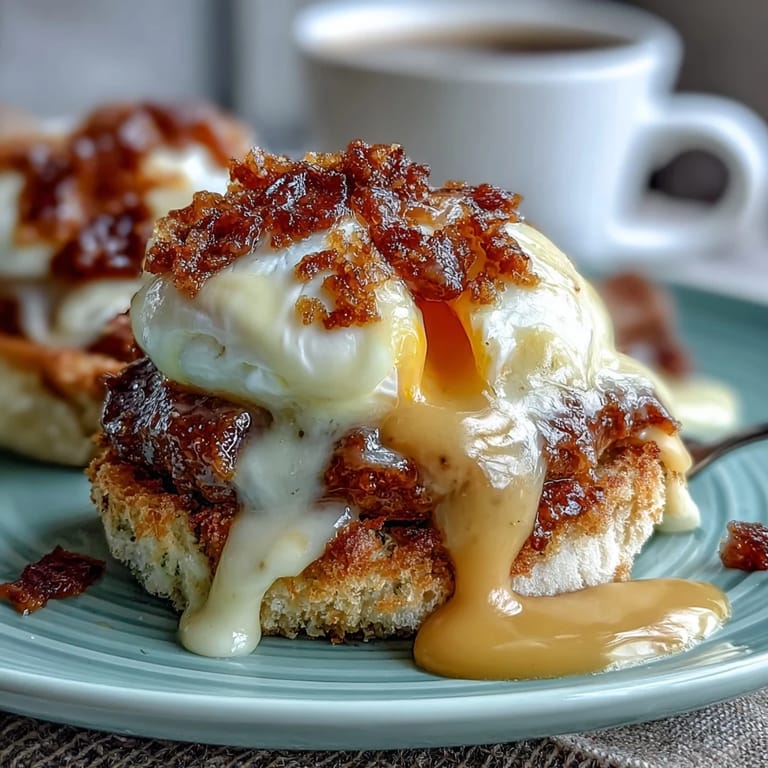
- Place two toasted muffin halves on each plate, crown each with a slice of warm Canadian bacon, then balance a poached egg on top. Spoon that golden hollandaise generously over everything, add a tiny handful of fresh chives if you have them, and taste the plate—add a whisper of salt and pepper.
 Pin This
 There's a moment right before serving when everything comes together—the muffins still warm from the toaster, the bacon fragrant and crispy at the edges, the hollandaise glossy and thick, and those poached eggs sitting there like little promises of breakfast perfection. When someone takes that first bite and you see them pause, eyes widening slightly, that's when you know why this dish has been around for over a century.
The Art of Poaching Without Panic
Poaching eggs used to intimidate me until I realized I was overthinking it. The water needs to be barely simmering, almost like it's sleeping, and you need to be gentle but confident when sliding the egg in. Once you've done it two or three times, it becomes automatic—your hands remember the motion, and you stop waiting for disaster.
Hollandaise Rescue Operations
If your hollandaise starts to look grainy or broken, don't panic—it's actually fixable most of the time. Take a clean bowl, add a tablespoon of cold water or cream, and whisk in the broken hollandaise slowly, as if you're starting over from scratch. The emulsion often comes back together, though you may need to add a touch more butter at the end to get the right consistency again.
Timing and Temperature Reality
The trickiest part of this dish isn't the technique—it's getting everything to the plate at the right temperature at the same time. I've learned to toast the muffins last, warm the bacon just before plating, and have my poached eggs ready to go.
- Start the hollandaise first since it needs to stay warm but can sit for a few minutes without damage.
- Toast your muffins just before assembly so they're still steaming when you plate—cold muffins make the whole dish feel sad.
- If you're making this for more than two people, poach your eggs in batches and keep the first batch warm in a bowl of hot (not boiling) water while you finish the others.
 Pin This
 Eggs Benedict taught me that some dishes become classics because they're not just delicious—they're a ritual, a small ceremony of breakfast done right. Make this when someone matters, and watch how a plate of food becomes a conversation starter.
Recipe Questions & Answers
- → How do I poach eggs perfectly?
Use gently simmering water with a splash of vinegar to help whites set while keeping yolks soft. Slide eggs in carefully and cook 3-4 minutes.
- → What makes hollandaise sauce creamy?
Slowly whisking warm melted butter into egg yolks over gentle heat creates an emulsified smooth and glossy sauce with balanced acidity from lemon juice.
- → Can I substitute Canadian bacon?
Yes, thick-cut ham or sautéed spinach can be used for a vegetarian twist, maintaining a rich and savory base.
- → How to keep hollandaise from curdling?
Keep sauce warm, not hot, and whisk continuously off heat after mixing in butter to maintain smooth texture.
- → What sides complement this dish?
Fresh fruit, mixed greens, or a light white wine like Sauvignon Blanc pair beautifully to balance richness.