 Pin This
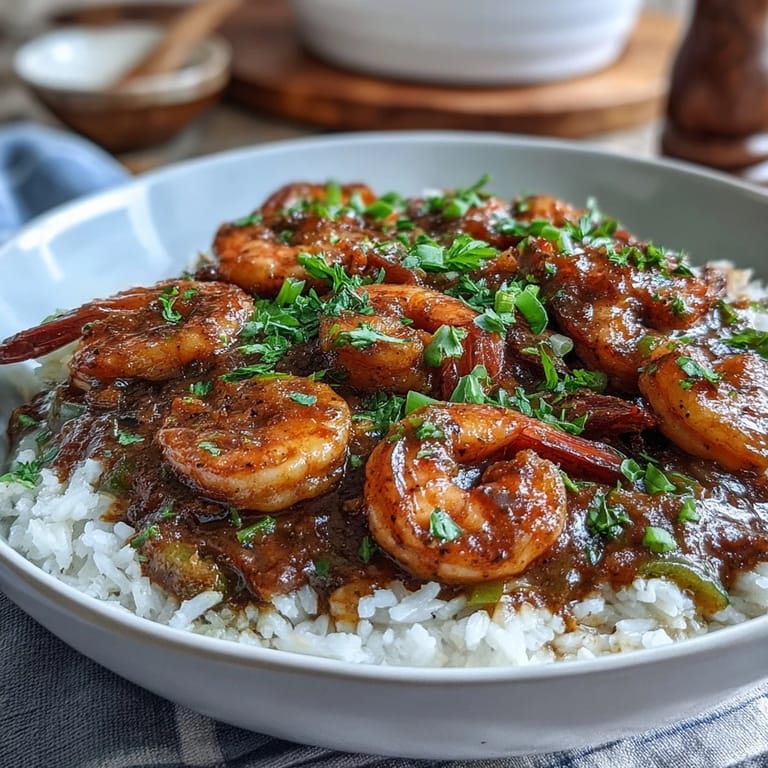
 The smell of roux browning always brings me back to a humid Saturday afternoon in my kitchen, windows thrown open, fan on high. I'd never made étouffée before, but I'd tasted it once in a tiny restaurant off Magazine Street and couldn't stop thinking about it. My first attempt was clumsy—I nearly panicked when the roux darkened faster than I expected—but the moment I stirred in the holy trinity of vegetables and watched them soften into that glossy, fragrant base, I knew I was onto something real. By the time the shrimp hit the pot, the kitchen smelled like New Orleans had moved in.
I made this for my neighbor after she mentioned missing home cooking, and she teared up at the table. She said it reminded her of her grandmother's kitchen, the one with the cast iron pots that never quite cooled down. We sat there talking about food memories until our bowls were empty, and she asked for seconds. That night, étouffée stopped being just a recipe and became a way to connect, to comfort, to say I see you without having to find the words.
Ingredients
- Vegetable oil and all-purpose flour: This duo forms the roux, the soul of the dish, so don't rush it or walk away from the stove.
- Onion, green bell pepper, and celery: The holy trinity of Cajun cooking, they melt into sweetness and provide the aromatic backbone.
- Garlic: Four cloves might seem bold, but it mellows beautifully and adds warmth without overpowering the seafood.
- Shrimp (or crawfish): Use fresh or frozen, just make sure they're peeled and deveined so you can focus on stirring, not peeling at the stove.
- Seafood stock: It amplifies the briny sweetness, but chicken stock works in a pinch if that's what you have.
- Worcestershire sauce: A few shakes add umami depth and a hint of tang that rounds out the spice.
- Cajun seasoning and cayenne pepper: These bring the heat and personality, adjust them based on your comfort with spice.
- Bay leaf: One leaf is enough to infuse a subtle earthiness that ties everything together.
- Cooked white rice: The fluffy, neutral base that soaks up every drop of that rich, dark gravy.
- Green onions and parsley: Fresh, bright, and essential for cutting through the richness right before serving.
Tired of Takeout? 🥡
Get 10 meals you can make faster than delivery arrives. Seriously.
One email. No spam. Unsubscribe anytime.
Instructions
- Start the roux:
- Heat the vegetable oil in a heavy pot over medium heat, then whisk in the flour slowly until smooth. Stir constantly with a wooden spoon or whisk, watching it transform from pale to golden to a deep chocolate brown over 15 to 20 minutes.
- Add the vegetables:
- Toss in the onion, bell pepper, and celery, stirring them into the dark roux until they soften and release their sweetness, about 5 to 7 minutes. Stir in the garlic and let it bloom for just a minute.
- Build the sauce:
- Pour in the seafood stock gradually, whisking to break up any clumps and create a smooth, velvety base. The roux will loosen and start to look like gravy.
- Simmer with shrimp:
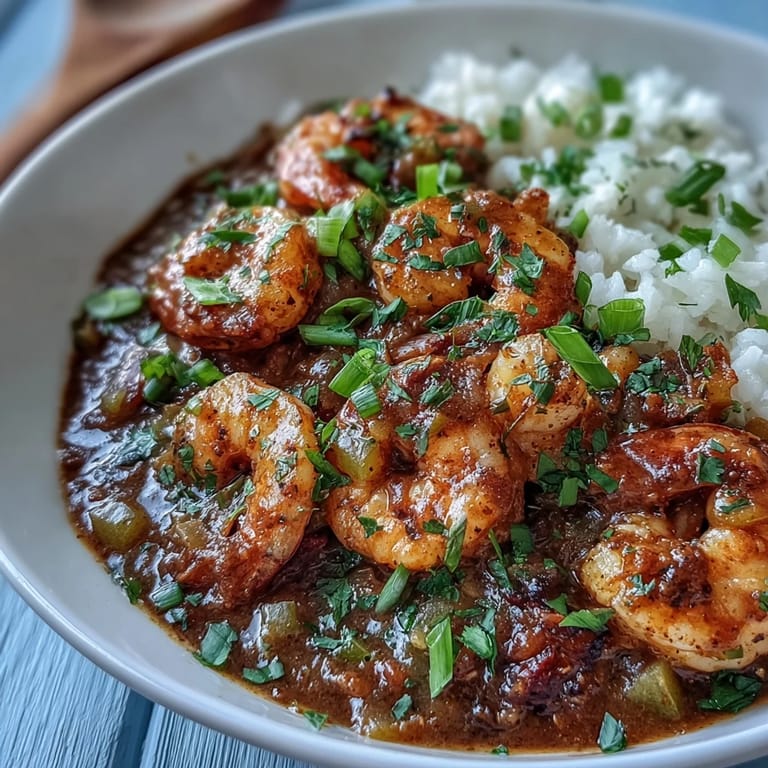
- Add the shrimp, Worcestershire sauce, Cajun seasoning, cayenne, bay leaf, salt, and pepper, then bring it to a gentle simmer. Reduce the heat to low and let it cook uncovered for 20 to 30 minutes, stirring now and then, until the sauce thickens and the shrimp turn pink and tender.
- Finish and serve:
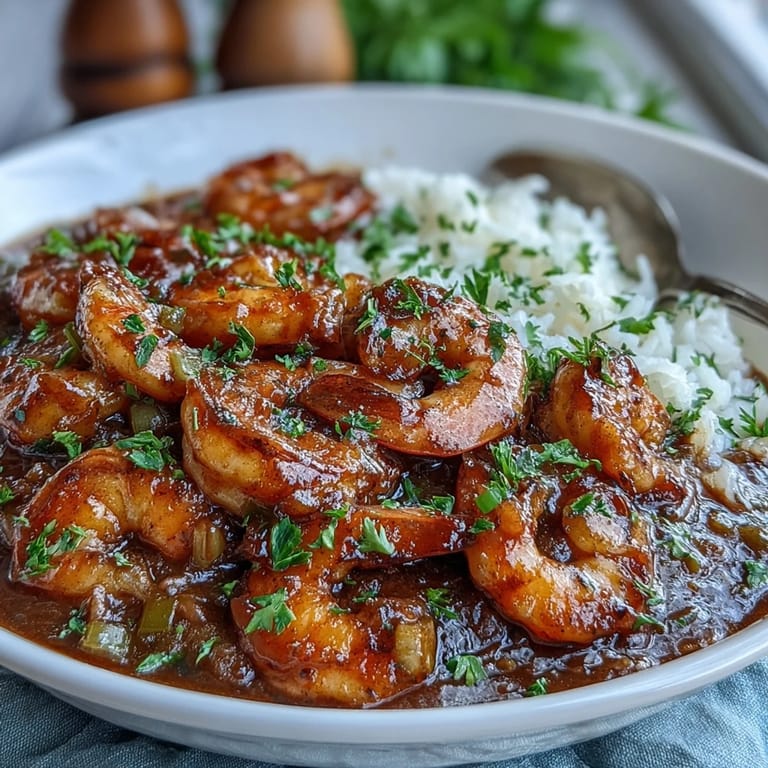
- Taste and adjust the seasoning, fish out the bay leaf, then spoon the étouffée generously over bowls of hot rice. Scatter green onions and parsley on top and serve immediately.
 Pin This
 One evening, I doubled the batch and froze half, thinking it would be a quick dinner down the road. A month later, on a night when I had no energy to cook, I reheated it and was stunned by how much better it tasted. The flavors had deepened, the spice had mellowed, and it felt like I'd been given a gift from my past self. Now I make extra on purpose, knowing that future me will be grateful.
Making It Your Own
Étouffée is endlessly adaptable, and I've learned not to be precious about it. If shrimp isn't your thing, try chunks of chicken thighs or smoky andouille sausage for a heartier version. I've even made it with mushrooms and extra vegetables for a vegetarian take that still delivers on richness and spice. The roux and the holy trinity do most of the heavy lifting, so swap the protein with confidence and taste as you go.
Storing and Reheating
Leftovers keep beautifully in the fridge for up to three days, and the flavors only get better as they sit. Reheat gently on the stovetop over low heat, adding a splash of stock or water if the sauce has thickened too much. If you freeze it, let it thaw overnight in the fridge before reheating, and expect the texture to be just as luscious as the day you made it.
Serving Suggestions
I always put out a basket of crusty French bread to soak up every last bit of sauce, and sometimes I'll add a simple green salad dressed with lemon and olive oil to balance the richness. If you want to lean into the Creole vibe, serve it with a cold beer or a glass of crisp white wine. The rice is non-negotiable, but everything else is just an invitation to make it feel like your table, your way.
- Offer hot sauce on the side for guests who want an extra kick.
- Garnish with extra parsley and green onions right before serving for a pop of color.
- Pair it with cornbread or hushpuppies if you're feeling indulgent.
 Pin This
 This dish has become my go-to when I want to feel grounded, when I need the kitchen to slow me down and remind me that good things take time. I hope it does the same for you.
Recipe Questions & Answers
- → What makes an authentic étouffée?
True étouffée begins with a dark roux cooked to chocolate color, providing the foundation of flavor. The holy trinity of vegetables, fresh shellfish, and gradual simmering creates that signature thick, velvety texture that coats the rice perfectly.
- → How do I achieve the perfect roux color?
Cook the flour and oil mixture over medium heat, whisking constantly for 15-20 minutes. The roux should reach a deep chocolate brown color—be patient as this slow development creates the rich, nutty flavor base essential to this dish.
- → Can I make this with other proteins?
Absolutely. Crawfish is traditional, but chicken, andouille sausage, or even mushrooms work beautifully. Adjust cooking time accordingly—chicken needs thorough cooking, while mushrooms require less time than shellfish.
- → Why does my étouffée taste better the next day?
Like many stews and braised dishes, the flavors continue to meld as it rests. The roux thickens further, the spices integrate more deeply, and the overall becomes more harmonious. Store refrigerated and reheat gently.
- → What's the difference between étouffée and gumbo?
While both use roux, étouffée features a thicker sauce that completely coats the main ingredient, whereas gumbo has a more soup-like consistency with okra or filé powder as thickeners. Étouffée also typically contains fewer ingredients and focuses on one primary protein.