 Pin This
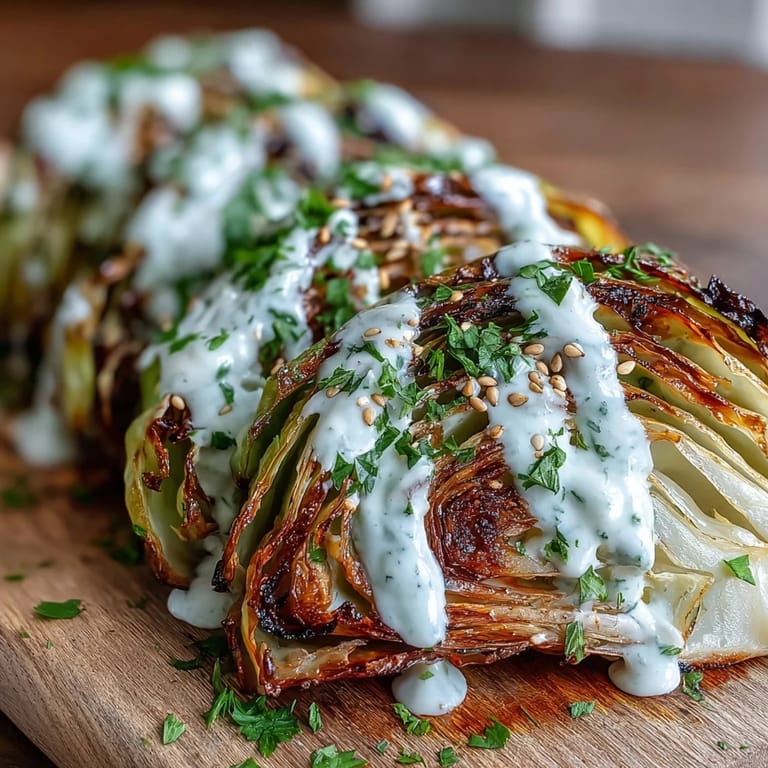
 There's a moment in late autumn when I realized roasted cabbage wasn't the sad, sullen side dish I'd always assumed it to be. My neighbor brought over a platter of these wedges—golden and charred at the edges—with a silky tahini drizzle, and I watched people go back for thirds. What struck me wasn't just how good it tasted, but how something so simple could feel elegant enough for company yet humble enough for a quiet weeknight dinner.
I made this for my sister during a particularly stressful week when she needed comfort food that didn't require apologies for being meat-free. She ate two wedges in complete silence, then looked up and asked if I'd finally figured out how to cook vegetables. That's when I knew this recipe had earned its place in my regular rotation.
Ingredients
- 1 medium green cabbage (about 2 lbs), cut into 8 wedges, core intact: Keeping the core in holds everything together while roasting, creating those beautiful caramelized layers that make this dish special.
- 2 tbsp olive oil: Use good quality oil here—it's the main fat carrying flavor, and you'll taste the difference.
- 1/2 tsp kosher salt and 1/4 tsp freshly ground black pepper: Season generously before roasting to build depth; salt draws out moisture that then caramelizes.
- 1/3 cup tahini (sesame seed paste): Look for raw or roasted tahini with no added oil; it should pour smoothly but hold some body.
- 1 small garlic clove, finely grated: Grating instead of mincing creates an emulsified paste that blends seamlessly into the sauce.
- 2 tbsp fresh lemon juice: Acid brightens the tahini's earthiness and keeps the sauce from feeling heavy.
- 2–4 tbsp cold water: Add gradually while whisking until the sauce reaches pourable consistency without becoming thin.
- 1/4 tsp ground cumin and 1/4 tsp kosher salt: These warm spices anchor the sauce and echo Middle Eastern traditions.
- 1 tbsp toasted sesame seeds, 2 tbsp fresh parsley or cilantro, pinch of smoked paprika or Aleppo pepper: These garnishes add textural contrast and visual warmth that complete the dish.
Tired of Takeout? 🥡
Get 10 meals you can make faster than delivery arrives. Seriously.
One email. No spam. Unsubscribe anytime.
Instructions
- Heat your oven and prep your pan:
- Preheat to 425°F and line a baking sheet with parchment paper so nothing sticks and cleanup stays effortless. The high heat is your friend here—it creates those caramelized edges you're after.
- Arrange and season the cabbage:
- Place wedges cut-side down, drizzle with olive oil, and scatter salt and pepper across both sides. The oil should glisten; if it looks sparse, add another half tablespoon.
- Roast until edges turn golden:
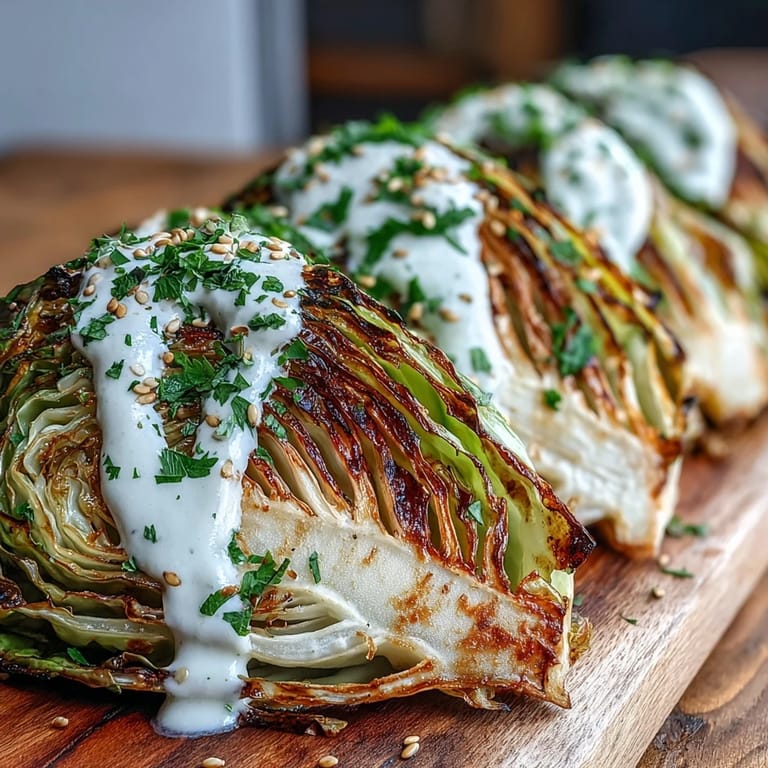
- Slide into the oven for 25–30 minutes, flipping halfway through so both sides caramelize evenly. You'll smell something deeply nutty and sweet when they're ready—that's your signal.
- Build the tahini sauce while cabbage roasts:
- Whisk tahini with grated garlic, lemon juice, cumin, and salt in a bowl, then add cold water one tablespoon at a time while whisking, until the mixture transforms from thick paste to silky sauce. This gradual approach prevents lumps and keeps everything smooth.
- Plate and drizzle:
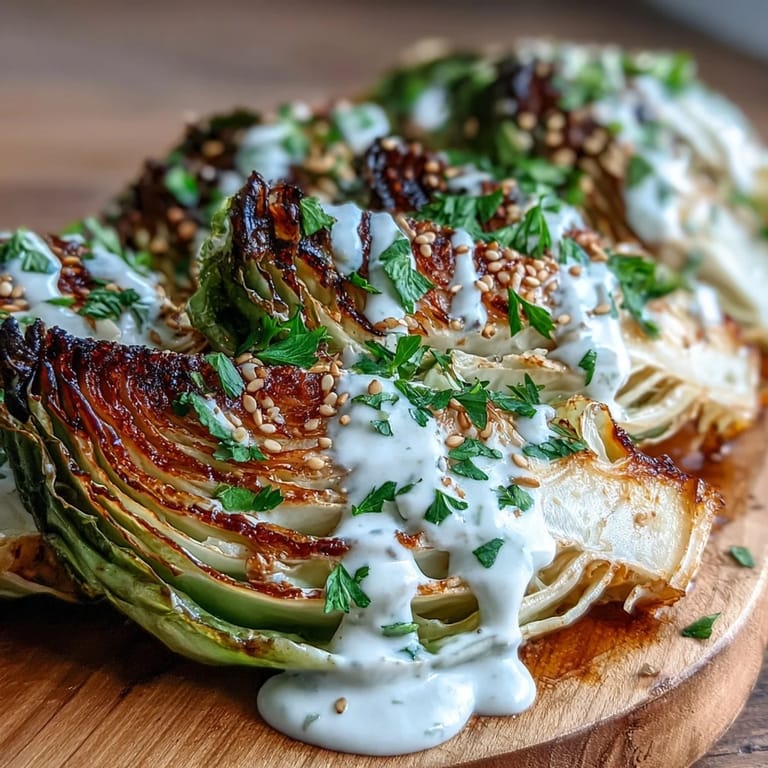
- Transfer warm cabbage to a serving platter and generously coat with tahini sauce—don't hold back, this is where the magic lives. Scatter sesame seeds, herbs, and a pinch of paprika on top.
 Pin This
 There was an evening when my daughter, who claims to hate vegetables, asked if we could make these again because she wanted them in her lunch box. In that moment, this simple dish transcended being just food and became proof that the right technique and sauce can change someone's mind about what they thought they disliked.
Why Temperature Matters Here
Those 425°F makes all the difference between steamed cabbage and caramelized cabbage. Lower temperatures won't create the crunchy edges that make this dish crave-worthy, while higher temps risk burning before the insides become tender. I learned this the hard way, and now I respect the oven temperature like it's a recipe ingredient—because it absolutely is.
The Tahini Sauce Ratio
The balance between tahini's density and acid's brightness took me three attempts to nail. Too much lemon and it tastes sharp; too little and it tastes one-dimensional. The cumin does quiet, grounding work in the background, and the grated garlic—not minced—is what prevents a bitter kick and creates an almost creamy texture that dressing alone can't achieve.
Serving Suggestions and Flexibility
This works beautifully as a standalone side, but I've also nestled warm cabbage wedges over quinoa or next to roasted chickpeas for a more substantial meal. The sauce pairs with almost any grain, and leftovers keep for three days in the fridge, though the wedges are honestly best served warm or at room temperature the same day you make them.
- Scatter pomegranate seeds on top for brightness and a textural pop that surprises people.
- Add a drizzle of pomegranate molasses to the tahini sauce if you want deeper, more complex flavor.
- Red cabbage works too, though it takes a few extra minutes to become tender.
 Pin This
 This dish quietly taught me that vegetables deserve the same respect and attention as any protein on the plate. When you roast cabbage until its edges sing and drape it in something as indulgent as tahini sauce, everyone shows up hungry and leaves satisfied.
Recipe Questions & Answers
- → How do I know when the cabbage is done roasting?
The cabbage wedges are ready when the edges are deeply browned and caramelized, and the thickest parts are tender when pierced with a fork. This typically takes 25–30 minutes at 425°F. Flipping halfway through ensures even cooking on both sides.
- → Can I make the tahini sauce ahead of time?
Yes, the tahini sauce can be made up to 3 days in advance and stored in an airtight container in the refrigerator. It may thicken when cold—simply whisk in a little additional water to return it to a pourable consistency before serving.
- → What can I serve with roasted cabbage wedges?
These wedges pair wonderfully with warm pita bread, rice, or quinoa for a more substantial meal. They also complement grilled meats, roasted chicken, or falafel. As part of a larger spread, they fit right in alongside hummus, baba ganoush, and other Middle Eastern-inspired dishes.
- → Can I use red cabbage instead of green?
Absolutely. Red cabbage works well and adds beautiful color. Note that red cabbage may take a few extra minutes to become tender, and the final dish will have a slightly different flavor profile—earthy with a hint more sweetness.
- → Is this dish freezer-friendly?
The roasted cabbage wedges are best enjoyed fresh, as the texture changes when frozen and thawed. However, the tahini sauce freezes beautifully for up to 3 months. Thaw overnight in the refrigerator and whisk well before using.
- → How can I add more protein to this dish?
Consider topping with chickpeas, crushed walnuts, or toasted pumpkin seeds. Serving alongside lentils, quinoa, or adding crumbled feta are other delicious ways to boost protein while complementing the Middle Eastern flavors.