 Pin This
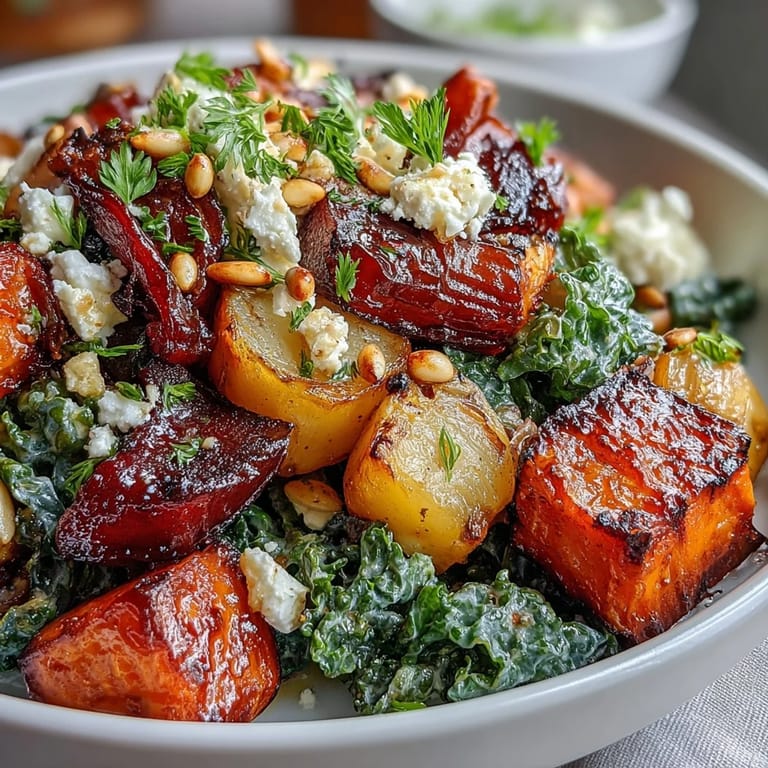
 There's something about November afternoons that makes me crave bowls brimming with roasted vegetables. I was standing at the farmers market, overwhelmed by the sudden bounty of root vegetables—carrots the color of sunset, parsnips pale and elegant, beets still wearing their soil like badges. A woman next to me was loading her basket with similar treasures, and we caught each other's eye with that knowing look of people who understand that winter cooking is its own kind of art. That's when this bowl came together in my mind, not as a recipe but as a feeling: warm, grounding, the kind of meal that makes sense when the days grow short.
I made this for my neighbor on a particularly gray January evening when she'd just returned from the hospital. She mentioned being tired of sad food, and somehow this felt right—vibrant colors, warmth, the kind of meal you can hold with both hands. She ate two bowls, and we sat in her kitchen talking about nothing in particular, the kind of conversation that matters more than the words themselves.
Ingredients
- Carrots (2 medium): Choose ones that feel firm and bright orange; they'll caramelize beautifully and add natural sweetness to balance the earthiness of the beets.
- Parsnips (2): These are the secret weapon nobody talks about—they get almost creamy when roasted and taste vaguely like vanilla if you're paying attention.
- Sweet potato (1 small): Cut it the same size as everything else so it roasts at the same pace; uneven pieces are the biggest mistake I made early on.
- Beet (1 small): Use just one so it doesn't stain everything magenta, though honestly there are worse things than a purple bowl.
- Olive oil (2 tablespoons for roasting): Don't skimp here; this is what turns everything golden and crispy at the edges.
- Kosher salt and black pepper: Use your fingers to distribute these evenly; it sounds small but it changes everything.
- Dried thyme (1 teaspoon): Fresh thyme is lovely if you have it, but dried works just fine and sometimes tastes more concentrated and honest.
- Curly kale (4 cups): The massaging step isn't fussy—it genuinely softens the leaves and makes them taste less like eating a sweater.
- Olive oil (1 tablespoon for kale): This small amount is enough when you're using your hands to work it in, which is half the point anyway.
- Olive oil (3 tablespoons for dressing): The warm oil carries flavor in a way cold dressing simply cannot.
- Apple cider vinegar (1 tablespoon): This is the bright note that wakes everything up; it's not optional unless you want a dull bowl.
- Dijon mustard (1 tablespoon): It emulsifies the dressing and adds a subtle sharpness that makes people ask what's in it.
- Honey or maple syrup (1 teaspoon): Just enough to round out the edges without making it sweet—think of it as a whisper.
- Shallot (1 small): Minced finely so it melts into the warm oil and becomes part of the dressing rather than a chunk you bite into.
- Toasted pumpkin seeds (¼ cup): These add crunch and a nutty depth; buy them already toasted if you're short on time, no judgment.
- Feta cheese (¼ cup crumbled): The salt and tang cut through the earthiness like a perfectly timed joke.
Tired of Takeout? 🥡
Get 10 meals you can make faster than delivery arrives. Seriously.
One email. No spam. Unsubscribe anytime.
Instructions
- Get your oven singing:
- Preheat to 425°F and line a baking sheet with parchment paper. This temperature is hot enough to caramelize without burning, and the parchment saves you from scrubbing later.
- Toss the root vegetables:
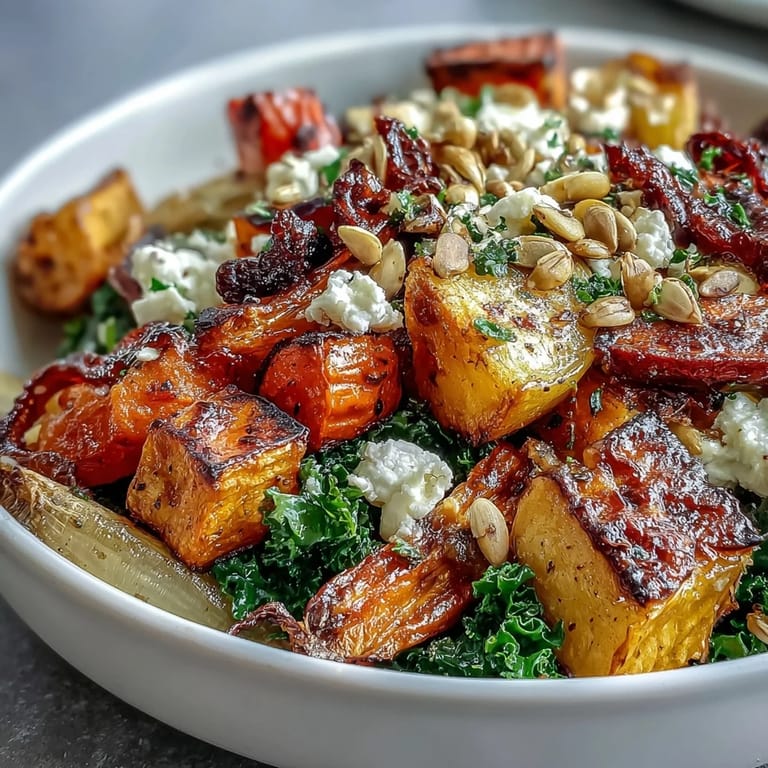
- Combine your carrots, parsnips, sweet potato, and beet in a bowl, then coat everything with the olive oil, salt, pepper, and thyme. Spread them out in a single layer on your prepared sheet, leaving some space between pieces so they can brown properly.
- Let them roast:
- Slide the sheet into the oven and set a timer for 15 minutes. When it goes off, give everything a stir because the edges that touch the pan brown fastest, and you want even color all around. Roast for another 15–20 minutes until everything is tender when you pierce it with a fork and the edges look like they've seen some caramel.
- Soften the kale:
- While the vegetables roast, put your torn kale in a large bowl and drizzle with olive oil and a pinch of salt. Use your hands to massage it for about a minute until it darkens slightly and loses that rough texture. It'll seem like nothing is happening, then suddenly it transforms.
- Make the warm dressing:
- Heat the olive oil in a small skillet over medium heat. Add your minced shallot and let it soften for about two minutes until it's fragrant and slightly golden. Whisk in the apple cider vinegar, Dijon mustard, and honey, stirring until everything comes together as an emulsion, then taste and adjust the salt and pepper.
- Assemble with intention:
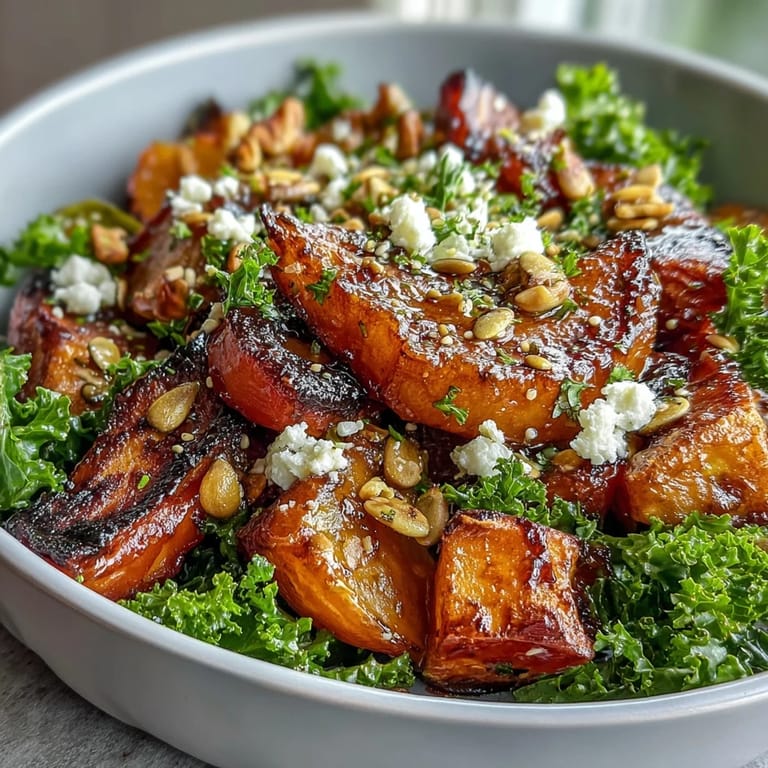
- Divide the massaged kale among four bowls, forming a bed. Top each with a generous portion of roasted vegetables, then drizzle the warm dressing over everything. The warmth of the dressing will slightly wilt the kale further, and the flavors will meld in the few minutes before you eat.
- Garnish and serve:
- Scatter pumpkin seeds and crumbled feta across the top of each bowl. Serve immediately while the vegetables still hold their warmth.
 Pin This
 My daughter once asked why I made this bowl so often, and I realized it wasn't about the vegetables at all—it was about the ritual of roasting things slowly on a winter afternoon, the way the house fills with such a particular kind of warmth. Cooking this feels like self-care that doesn't pretend to be self-care.
Why Root Vegetables Are Winter's Best Kept Secret
Root vegetables have this quiet dignity that gets overshadowed by flashier ingredients. They're affordable, they store for weeks, and most importantly, they get sweeter as the weather gets colder because the plant converts starches to sugar as a survival mechanism. It's like the vegetables themselves are already adapted to what you need in January.
The Art of Massaging Kale
People always think I'm joking when I talk about massaging kale, but it's genuinely transformative. The physical action breaks down the cell walls slightly, making the leaves more tender and more able to absorb the oil and dressing. It takes maybe ninety seconds and feels almost meditative, the kind of small kitchen task that makes you feel like you're actually cooking rather than just heating things up.
Variations and Reasons to Experiment
This bowl is sturdy enough to handle changes without falling apart. I've swapped the kale for spinach on nights when I'm tired, added roasted chickpeas for more protein, and once even threw in some pomegranate seeds because they were sitting in my fridge looking hopeful. The warm dressing works with almost any green and vegetable combination, which means you can follow the seasons without rewriting the whole recipe.
- Try adding cooked farro or pearl barley instead of serving it as a salad-like bowl, turning it into something closer to a grain situation.
- Roast the beet separately if you're worried about pink everything; beets are aggressive with their color and opinions.
- Make extra dressing because it's good on almost anything, from roasted salmon to scrambled eggs the next morning.
 Pin This
 This bowl became my answer to the question of how to eat well when the world feels cold and uncertain. It's not complicated, but it's complete.
Recipe Questions & Answers
- → What root vegetables work best for this bowl?
Carrots, parsnips, sweet potatoes, and beets create a hearty, sweet, and earthy combination when roasted.
- → Can I substitute kale with other greens?
Yes, baby spinach or Swiss chard can be used as alternatives for a milder leafy green texture.
- → How is the warm dressing prepared?
The dressing is made by gently sautéing minced shallots in olive oil, then whisking in apple cider vinegar, Dijon mustard, and honey, seasoned with salt and pepper.
- → What toppings enhance the bowl’s texture?
Toasted pumpkin seeds add crunch, while crumbled feta introduces a creamy, salty element; both complement the roasted vegetables well.
- → Is this bowl suitable for vegan diets?
Omit the feta cheese or replace it with a plant-based alternative to make this dish vegan-friendly.