 Pin This
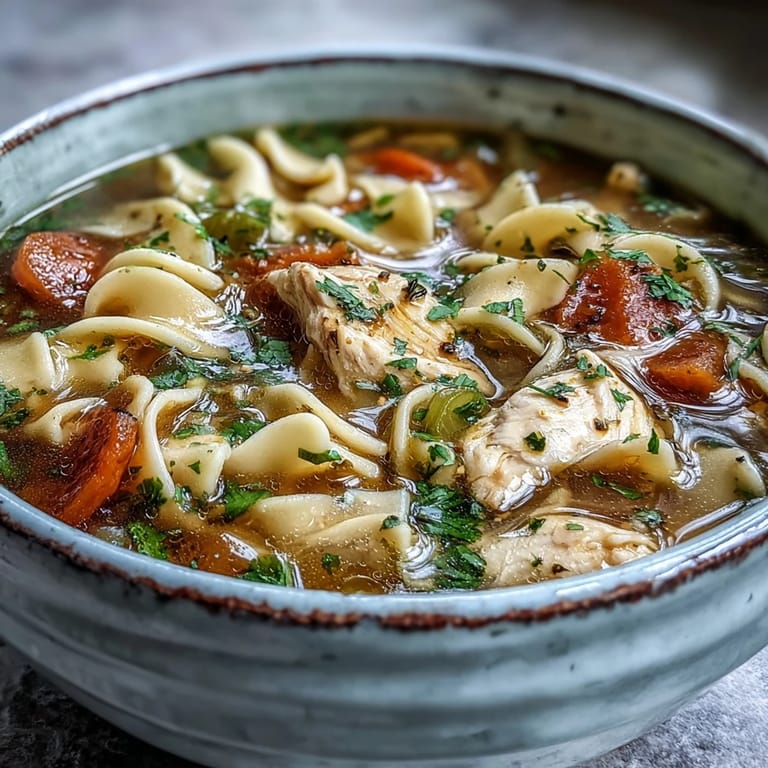
 My neighbor knocked on my door one gray afternoon with flour in her hair, asking if I had chicken broth because hers had crystallized in the back of her pantry. Twenty minutes later, we were standing over a steaming pot of this soup, and she admitted she'd never made chicken noodle soup from scratch before. That moment stuck with me, how something so simple could feel like a small discovery for someone. Now whenever I make it, I think about how this soup doesn't need fancy techniques or obscure ingredients, just the willingness to let good flavors develop slowly.
I made this for my brother after he'd been sick for three days, and watching him eat an actual meal instead of staring at his phone felt like a small victory. He asked for seconds, then thirds, and by the end he was dunking bread into the broth like he was eight years old again. That's when I understood this soup isn't just food, it's a quiet way of saying you're thinking about someone.
Ingredients
- Chicken breasts: Two boneless, skinless breasts diced into bite-sized pieces work perfectly because they cook quickly and stay tender when you don't overthink them.
- Onion, carrots, and celery: This holy trinity of vegetables isn't a rule, it's just what tastes right together, and dicing them small means they soften evenly.
- Garlic: Two cloves minced fine, because underestimating garlic is a rookie mistake I made exactly once.
- Low-sodium chicken broth: Six cups total, and the low-sodium part matters because you're seasoning as you go, not fighting existing salt.
- Egg noodles: Four ounces of these humble strands, which somehow absorb all the broth's warmth and personality.
- Bay leaf, thyme, and parsley: These dried herbs are your flavor backbone, turning plain broth into something that smells like someone cares.
- Salt, pepper, and olive oil: Two tablespoons of good olive oil to start, plus salt and pepper to taste at the end because seasons change and so do your instincts.
Tired of Takeout? 🥡
Get 10 meals you can make faster than delivery arrives. Seriously.
One email. No spam. Unsubscribe anytime.
Instructions
- Build your flavor foundation:
- Heat the olive oil in a large pot over medium heat and add your diced onion, carrots, and celery. Let them sauté for about four to five minutes, listening for the gentle sizzle and watching the onion turn translucent because that's when you know they're softening properly.
- Wake up the garlic:
- Stir in your minced garlic and cook for just one minute until it smells incredible and fragrant. This is not the time to wander away, because garlic can shift from perfect to bitter in a blink.
- Introduce the chicken:
- Add your diced chicken and stir it around for three to four minutes, cooking until the outside is no longer pink. You're not trying to finish cooking it here, just giving it a head start.
- Pour in the broth and seasonings:
- Add all six cups of chicken broth, then drop in the bay leaf and sprinkle in the thyme and parsley. Bring the whole thing to a gentle boil, which means you'll see bubbles breaking the surface but not a rolling, aggressive boil.
- Let it simmer quietly:
- Reduce the heat and let it simmer for ten minutes, during which time the flavors start finding each other and the chicken finishes cooking through. This is a good moment to set a timer and not stare at the pot.
- Add the noodles:
- Stir in your egg noodles and let them simmer for eight to ten minutes, checking them at the eight-minute mark because pasta timing depends on your stove and the noodle thickness. The noodles should be tender but not falling apart, and the chicken should flake easily with a fork.
- Finish and taste:
- Remove the bay leaf, take a spoonful of broth, and taste it. Add more salt and pepper if it needs it, because this is your moment to make it exactly right.
- Serve with care:
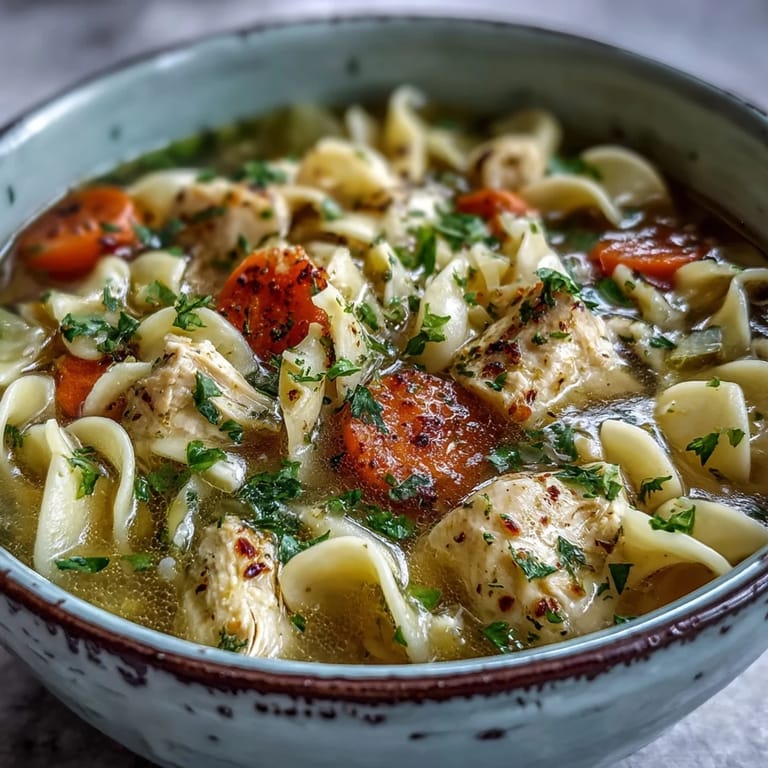
- Ladle the soup into bowls and garnish each one with a sprinkle of fresh parsley, which adds a tiny bit of brightness and makes it look like you tried.
 Pin This
 I served this to someone I was trying to impress on a first dinner at my place, and instead of it being awkward, we ended up laughing about how neither of us could stop eating. That's when I realized this soup has a way of making people relax, of turning a kitchen into a comfortable place where conversation actually happens.
When to Make This Soup
This soup exists for the moments when you want something nourishing but don't have the energy for complicated cooking, or when you know someone needs comforting without actually saying it. It's equally at home on a Tuesday night when you're tired as it is when you're feeding people you care about. Winter is its season, but honestly, a bowl of this on a cool evening in autumn or spring feels just right too.
Making It Your Own
The formula here is solid, but I've learned that good recipes are invitations to play, not rigid rules. Some days I use bone-in chicken thighs instead of breasts because they stay moister and the broth gets richer. A squeeze of fresh lemon juice at the end adds brightness that's subtle but changes the whole experience, and I've been known to add a small handful of spinach or some diced zucchini if they're sitting on the counter.
Pairing and Serving Ideas
Pair this with something crusty for dunking, because there's a reason bread and soup belong together, and half the joy is that quiet ritual of soaking and eating. A light white wine like Sauvignon Blanc works beautifully if you're leaning into the comfort dinner vibe. If you're making gluten-free noodles, nobody will taste the difference, and if you double the recipe, it freezes beautifully and tastes even better after a few days in the freezer when all the flavors have gotten to know each other.
- Toast thick bread slices with a rub of garlic and olive oil for something more special than plain bread.
- A simple green salad on the side keeps the meal from feeling too heavy, especially if you're serving it as a complete dinner.
- Leftover soup keeps for three days in the fridge and reheats gently on the stove without losing its soul.
 Pin This
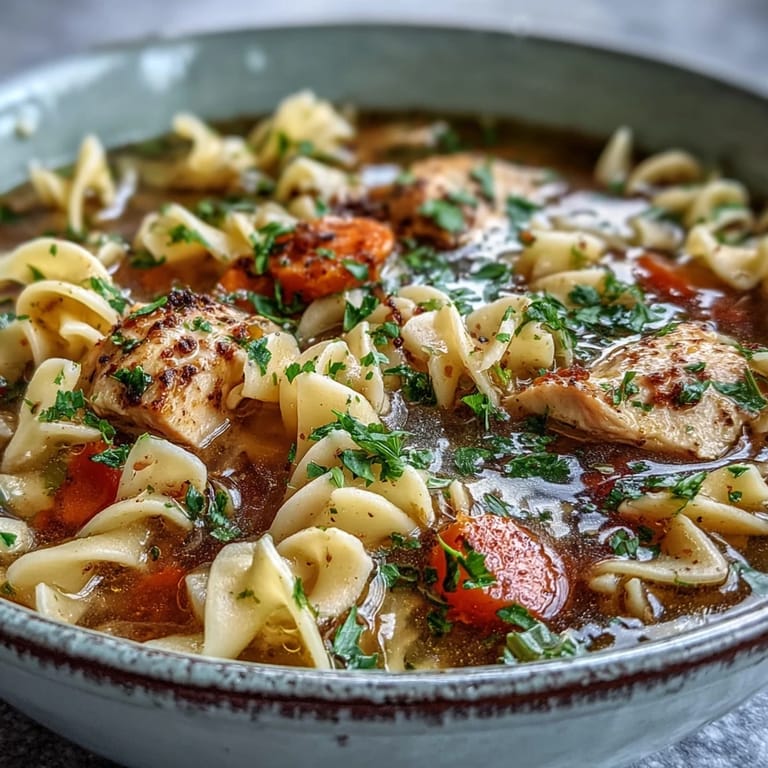
 This soup has taught me that comfort food doesn't need to be complicated, and sometimes the simplest things are the ones that matter most. Make it with care, taste as you go, and know that you're doing something right.
Recipe Questions & Answers
- → Can I use rotisserie chicken instead of raw chicken breasts?
Yes, rotisserie chicken works perfectly. Add the shredded chicken in step 6 with the noodles to heat through, reducing overall cooking time.
- → What type of noodles work best for this soup?
Traditional egg noodles are ideal, but you can substitute with wide pasta ribbons, small shells, or gluten-free noodles depending on dietary needs.
- → How do I store and reheat leftover soup?
Store in an airtight container in the refrigerator for up to 3 days. Reheat gently on the stovetop, adding extra broth if the noodles have absorbed liquid.
- → Can I freeze chicken noodle soup?
Freeze the soup without noodles for up to 3 months. Cook noodles fresh when reheating to prevent them from becoming mushy.
- → How can I make the broth more flavorful?
Use bone-in chicken pieces and simmer longer, or add a splash of lemon juice and fresh herbs like dill or rosemary for enhanced depth of flavor.
- → What vegetables can I add or substitute?
Try adding peas, corn, green beans, or mushrooms. Parsnips and turnips make excellent substitutes for carrots while maintaining the soup's hearty character.